 how-to
Florida Home Insurance Roof Age Requirements: 2026 Guide
Table of Contents
- Understanding Florida's 15-Year Roof Age Rule
- Florida Statute 627.7011 and Roof Age Requirements Explained
- What Happens When Your Roof Reaches 15 Years Old
- The Roof Certification Inspection Process
- Home Insurance Non-Renewal and Roof Age: Your Rights
- How Roof Material Type Affects Insurance Eligibility
- Steps to Protect Your Coverage When Your Roof Is Aging
- Frequently Asked Questions
Last Updated: October 4, 2026
Understanding Florida's 15-Year Roof Age Rule
Florida's roof age requirements exist because roofs deteriorate over time. After 15 years, most roofs show significant wear from wind, sun, and rain damage. Florida Statute 627.7011 created specific rules around roof age and insurance eligibility to standardize how insurers assess this risk.
Insurers can require a roof inspection when your roof reaches 15 years old. They may deny coverage, non-renew your policy, or charge higher premiums if the roof fails inspection. This rule applies to all residential homeowners insurance policies in Florida.
Florida Statute 627.7011 and Roof Age Requirements Explained
Florida Statute 627.7011 sets the legal framework for roof age and insurance. The law allows insurers to require a roof inspection for homes with roofs 15 years or older, performed by an authorized inspector. Insurers can deny coverage or non-renew policies if the roof doesn't meet standards.
Key points from the statute:
- Insurers can inspect roofs at the 15-year mark
- The inspection must follow state guidelines for authorized inspectors
- Roofs must meet building code standards to maintain coverage
- Insurers can decline to renew policies based on roof condition
- Homeowners have the right to dispute findings
The statute protects both insurers and homeowners by providing standardized rules. Roof age is measured from the installation date, not the inspection date, so you need documentation proving when your roof was installed.
Florida Statute 627.7011 on homeowners insurance requirements
What Happens When Your Roof Reaches 15 Years Old
When your roof hits 15 years, your insurer may require an inspection. Your insurer reviews your policy, identifies the roof age, sends notice requiring an inspection, and an authorized inspector examines your roof and provides a report to determine your coverage decision.
The inspection isn't optional. If your insurer requires it and you don't comply, they can cancel your policy. This leaves you uninsured and unable to get a mortgage.
Your insurer examines shingle condition, roof structure, visible damage, ventilation, flashing, and whether the roof meets current building codes.
If the inspection shows significant wear, your insurer may non-renew your policy, require roof replacement, offer renewal at a higher premium, or deny roof-related claims. Non-renewal means your insurer won't renew when your policy expires, you have time to find new coverage, but must act quickly.
The Roof Certification Inspection Process
A roof certification inspection is a professional evaluation performed by an authorized inspector to verify your roof's condition and age. This inspection determines whether your roof meets insurance underwriting standards.
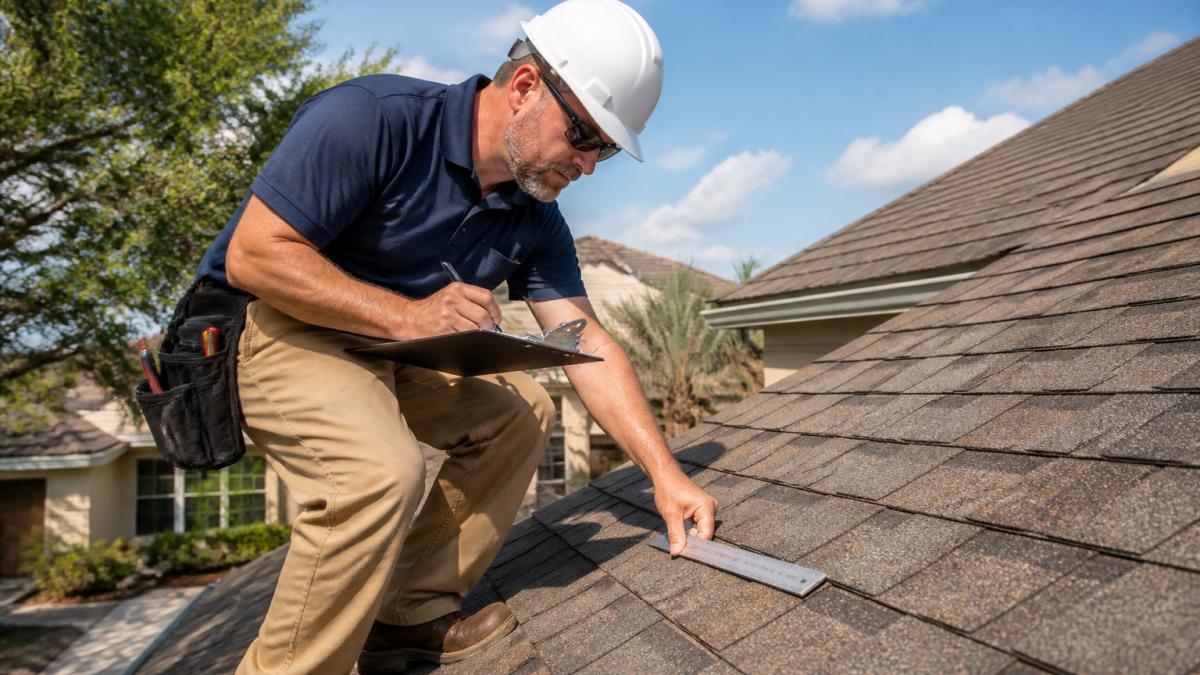
The inspection process follows state guidelines. Authorized inspectors must be licensed and trained. They follow a standardized checklist to evaluate roofs.
Here's what an authorized inspector examines:
- Shingle condition and granule loss
- Flashing around vents and chimneys
- Roof structure and sagging
- Visible damage or deterioration
- Proper ventilation
- Compliance with building codes
- Roof age documentation
The inspector takes photos and measurements, documenting findings on an official report that goes to your insurer. The inspection typically takes 30 minutes to an hour and is non-invasive. You and your insurer both receive a copy of the report with findings and recommendations.
If the roof passes, your insurer confirms coverage. If it fails, your insurer may require repairs or replacement, typically with a deadline for completion. Inspection costs vary ($150-$400) depending on roof size; some insurers cover it, others charge homeowners.
Home Insurance Non-Renewal and Roof Age: Your Rights
Non-renewal occurs when your insurer declines to renew your policy at the end of its term. This differs from cancellation, which happens mid-policy and is heavily restricted by law. Cancellation requires non-payment, fraud, or material misrepresentation; roof age alone cannot trigger it.
What Your Insurer Must Do
Florida Statute 627.409 requires your insurer to provide written notice at least 30 days before expiration, state the specific reason for non-renewal, include information about your right to request an explanation, and provide contact information for filing a complaint with the Department of Financial Services.
Your Rights When Facing Non-Renewal
Right 1: Request a Written Explanation
If the non-renewal notice is vague, request a detailed written explanation within 10 days. Your insurer must provide specifics: which inspection findings triggered non-renewal, which building codes the roof fails to meet, or what repairs are required.
Right 2: Request an Independent Inspection
Hire an independent, licensed roof inspector to evaluate your roof separately. If the independent inspection contradicts your insurer's findings or shows better condition, submit the report with a request for reconsideration. Independent inspections cost $200-$400 and can successfully overturn non-renewal decisions.
Right 3: Appeal Through the Department of Financial Services
File a complaint with the Department of Financial Services, Division of Consumer Services at myfloridacfo.com or by mail. Include your policy number, non-renewal notice, inspection reports, repair documentation, and written explanation. The Department investigates and can order reconsideration if violations are found.
Right 4: Negotiate Conditional Renewal
Contact your insurer's underwriting department to propose conditional renewal: "I will replace my roof by [date]. Will you renew my policy conditionally pending completion?" Many insurers accept if you provide a signed contractor contract, realistic timeline (60-90 days), proof of financing, and progress updates.
What Happens If Non-Renewal Stands
If non-renewal stands and you can't obtain private insurance, Citizens Property Insurance becomes your fallback, a last resort, not a long-term solution.
Citizens Property Insurance: Coverage, Cost, and Limitations
Citizens Property Insurance is the state's insurer of last resort. It exists to cover homeowners who can't obtain private insurance. However, Citizens coverage comes with significant trade-offs:
Coverage Differences
Citizens policies cover dwelling, personal property, liability, and medical payments, but with key differences: Citizens may deny roof age-related claims (covering only storm-related damage), has higher deductibles ($2,500-$5,000 for wind/hail vs. $500-$1,500 for private insurers), and offers fewer mitigation discounts.
Cost Comparison
Citizens premiums are 30-50% higher than private insurance. For a $300,000 home, expect $1,800-$2,200 annually versus $1,200-$1,500 for private insurance, $3,000-$3,500 more over 5 years. Additionally, if Citizens' claims exceed reserves, the state can assess all policyholders a surcharge of $100-$300 annually.
Limitations
Citizens policies are temporary; you must switch to private insurance when available. If your roof is 15+ years old, private insurers will be reluctant to cover you, creating a catch-22. This is why addressing roof age before non-renewal is critical, once on Citizens, your options narrow.
The Timeline for Action
When you receive a non-renewal notice: Days 1-5, request a detailed explanation if vague. Days 6-15, contact your insurer about conditional renewal. Days 16-25, hire an independent inspector and file a Department of Financial Services complaint if negotiation fails. Days 26-30, shop for private insurance or contact Citizens.
Preventing Non-Renewal in the First Place
Get a professional inspection 1-2 years before your roof reaches 15 years. Address identified issues immediately, keep detailed records of inspections and repairs, and communicate proactively with your insurer. Homeowners who disclose roof condition and demonstrate maintenance responsibility are far less likely to face non-renewal.
How Roof Material Type Affects Insurance Eligibility
Your roof's material type influences how insurers assess remaining useful life. Asphalt shingles (15-20 years) are scrutinized closely after year 15. Metal roofs (40-60 years) are viewed favorably at 15 years. Tile roofs (50+ years) rarely trigger denial based on age alone. Composite roofs (20-30 years) are treated like asphalt. Metal and tile roofs perform better in hurricanes and offer better insurance prospects long-term, though they cost more upfront.
Steps to Protect Your Coverage When Your Roof Is Aging
Acting proactively protects your coverage and your home's value. But knowing what to do after an inspection, especially if it fails, is where most homeowners get stuck. Here's a roadmap that covers both prevention and response.
Step 1: Know Your Roof's Age and Document It
Find your roof's installation date in home purchase documents, inspection reports, contractor receipts, or property tax records. Ask your insurer if you can't find documentation.
Step 2: Schedule a Proactive Inspection Before Your Insurer Requires One
Get an inspection 1-2 years before your roof hits 15 years, giving you time to address issues on your schedule. Hire an authorized inspector from your insurer's approved list or the Department of Financial Services directory ($150-$400).
Step 3: Understand What "Pass" and "Fail" Actually Mean
Inspectors document roof condition across multiple categories: shingle granule loss, flashing integrity, structural sagging, visible leaks, and code compliance. Your insurer then decides if findings meet their underwriting standards. A roof with minor issues might pass one insurer's standards but fail another's.
Step 4: If Your Roof Fails Inspection, Know Your Options Within 30 Days
You typically have 30-60 days to respond before non-renewal takes effect.
Option A: Request Repairs Instead of Replacement
If the inspection identifies specific, repairable issues (damaged flashing, missing shingles, minor leaks), get a contractor estimate and submit it with a repair timeline. Many insurers will renew if you commit to repairs within 90 days and provide proof of completion. Document all repairs with photos and invoices.
Option B: Get a Second Inspection
Hire an independent inspector to dispute your insurer's findings. If it contradicts the original report, submit it for reconsideration.
Option C: Plan Replacement on Your Timeline
If repairs won't suffice, start replacement planning immediately. Show your insurer a signed contractor contract and timeline; they may renew conditionally, meaning coverage continues if you complete replacement by a set date (typically 6-12 months).
Step 5: Explore Financing and Assistance Programs
Roof replacement costs $8,000-$25,000. Financing options include: My Safe Florida Home Program (grants up to $10,000 for incomes up to 250% of federal poverty level), PACE Financing (5-8% interest, 10-20 year repayment through property tax), contractor financing (0% for 12-24 months), and insurance claims for storm damage.
Step 6: Maintain Your Roof Regularly to Extend Its Life
Clean gutters twice yearly, remove debris, trim overhanging branches, and inspect after storms. Regular maintenance doesn't reset the 15-year clock but demonstrates responsibility to your insurer and extends your roof's functional life.
Step 7: Keep a Roof Documentation File
Maintain a folder with installation date, contractor name, all inspection reports, roof photos, repair receipts, maintenance records, and insurer correspondence. This file is invaluable when selling, switching insurers, or disputing inspection findings.
Step 8: When Selling, Disclose Roof Age Upfront
If your roof is 12+ years old, disclose its age and condition in your listing. Buyers will discover it during inspection anyway; early disclosure prevents deal collapse. If your roof is 15+ years old, expect buyers to require professional inspection.
The Timeline That Matters
If your roof is 10-12 years old: Schedule a proactive inspection within the next year. If your roof is 13-14 years old: Get an inspection immediately and begin replacement planning. If your roof is 15+ years old: Contact your insurer about requirements and act within 30 days of any non-renewal notice.
Frequently Asked Questions
What is the 15-year roof rule for insurance companies in Florida?
Florida Statute 627.7011 allows insurers to deny coverage or non-renew policies for homes with roofs 15 years or older, unless the roof passes an authorized inspection or has been certified for replacement cost coverage. This statutory requirement means insurers can assess roof age as part of their underwriting guidelines and risk assessment. The rule applies to most homeowners insurance policies statewide.
Can I get homeowners insurance if my roof is 20 years old?
Insuring a roof over 15 years old is difficult but possible. You'll need an authorized roof inspection showing the roof is in good condition, or you must have a roof certification from a licensed contractor stating it meets building code standards. Some insurers may still deny coverage based on age alone, even with documentation. Citizens Property Insurance may accept older roofs under specific conditions, but private insurers typically require proof of roof integrity.
What documentation do I need to prove my roof's age and condition?
Keep your original roofing permit and contractor invoice showing installation date. For inspections, hire an authorized inspector approved by your insurer, they'll document shingle condition, structural integrity, and compliance with building codes. A roof certification letter from a licensed roofing contractor detailing materials, installation date, and current condition strengthens your case. Some insurers accept photos and maintenance records. Contact your insurer directly about their specific documentation requirements.
Will my insurance company drop me just because my roof is 15 years old?
Not automatically, but they can. Insurers have discretion to non-renew policies based on roof age under statutory requirements. However, a passing authorized inspection or roof certification can prevent denial of coverage. Non-renewal differs from denial, non-renewal means your policy simply won't be renewed at the next term, giving you time to arrange alternatives. Review your policy documents and contact your agent immediately if you receive a non-renewal notice related to roof age.