 how-to
Getting Accurate Market Value for Your Home
Table of Contents
- Why Knowing Your Home's Market Value Matters
- Step 1: Get an Instant Online Home Value Estimate
- Step 2: Research Comparable Home Sales in Your Area
- Step 3: Understanding Comparative Market Analysis From a Real Estate Professional
- Assessed Value vs. Market Value: What's the Difference?
- Step 4: Hire a Professional Appraiser for Accuracy
- Step 5: Update Your Property Details to Improve Your Estimate
- Reconciling Conflicting Estimates: A Practical Process
- Frequently Asked Questions
Last Updated: October 12, 2026
Why Knowing Your Home's Market Value Matters
Understanding the market value home represents shapes every financial decision you make as a homeowner, whether you're selling, refinancing, or just curious about your equity.
At FloridaSells, we help homeowners and buyers navigate this every day. The challenge isn't finding a number, it's finding the RIGHT one. Online estimates, comparable sales, appraisals, and tax assessments can all tell wildly different stories.
This guide walks you through five proven steps to get an accurate market value for your home, why the methods disagree, and how to reconcile conflicting estimates.
Step 1: Get an Instant Online Home Value Estimate
The fastest way to get a ballpark figure is an online home valuation tool. These estimates are instant and free, a smart starting point but not the final answer.
How Automated Valuation Models Work
Automated valuation models (AVMs) power most online estimates. They use public records, recent sales, and algorithms, analyzing square footage, lot size, age, and location.
You enter your address, and the system pulls property records and comparable sales to calculate an estimate in seconds.
The appeal is obvious, but speed comes with a trade-off.
Why Online Estimates May Differ From Actual Market Value
Here's where homeowners get frustrated. Your Zillow estimate might say $450,000, your Redfin estimate $465,000, your county assessment $420,000.
Why the gap? They don't know if your roof is new or 20 years old, can't see last year's kitchen renovation, and miss neighborhood factors like proximity to theme parks, schools, or major employers.
AVMs also struggle with unique properties: custom-built homes, unusual lots, or houses with significant recent updates often get valued too low or too high.
The bottom line: use online estimates to get oriented, not to make decisions.
Step 2: Research Comparable Home Sales in Your Area
Comparable sales data is where real valuation begins. It takes more effort than an online estimate but is far more reliable.
Comparable sales ("comps") are homes similar to yours that sold recently nearby. Analyzing what they actually sold for gives you a realistic picture of current market value in your neighborhood.

How to Select Truly Comparable Properties
Not all recent sales are useful comparisons. A home two miles away in a different neighborhood may be a poor match, and one that sold two years ago doesn't reflect today's market.
Focus on these criteria when selecting comps:
- Location: Same neighborhood or within one mile. Proximity matters enormously for market value.
- Sale date: Sold within the last 3-6 months. Older sales don't reflect current market conditions.
- Property type: Same type (single-family, condo, townhome). Don't compare a condo to a single-family home.
- Size: Within 10-20% of your home's square footage. A 2,000 sq ft home and a 2,500 sq ft home are comparable. A 2,000 sq ft and 3,500 sq ft home are not.
- Condition: Similar condition and age. A recently renovated home shouldn't be compared to one needing significant repairs.
- Bedrooms and bathrooms: Same or very close. A 3-bed/2-bath is different from a 4-bed/3-bath.
Aim for at least 3-5 solid comps. More is better if you can find them.
Using Price Per Square Foot and Recent Sales Data
Price per square foot is a useful shortcut. If comps in your area sold for $180-$200 per square foot and your home is 2,000 square feet, you'd estimate $360,000-$400,000.
But don't rely on it alone. A recently updated kitchen might command $20-$30 per square foot more than original 1980s finishes, and a premium lot $15-$25 more.
Use it as a starting point, then adjust for specific differences between your home and the comps.
Step 3: Understanding Comparative Market Analysis From a Real Estate Professional
A CMA includes:
- 5-10 comparable sales with detailed analysis
- Active listings in your price range
- Recently expired listings that didn't sell
- Market trends and days-on-market data
- A professional opinion of value
The agent has MLS (Multiple Listing Service) access, containing detailed data on every home sale in your area that you might not find on public websites.
Most agents provide a CMA for free if you're considering selling or buying.
A CMA typically estimates value within a range rather than a single number. You might see "estimated value: $425,000-$450,000" based on the comps and market conditions.
Assessed Value vs. Market Value: What's the Difference?
Your county assessor determines an "assessed value" for tax purposes. This is NOT the same as market value.
Assessed value is what your county uses to calculate property taxes.
Market value is what a buyer would pay today in a normal market, and it's what matters when selling, refinancing, or determining equity.
Your assessed value might be $380,000 while your actual market value is $450,000.
Check your county assessor's website for your assessed value and compare it to your market value estimate.
Step 4: Hire a Professional Appraiser for Accuracy
When you need an official, defensible valuation, hire a licensed appraiser, the gold standard for accuracy.
An appraiser inspects your home and comparable properties thoroughly, producing a formal report lenders, courts, and tax authorities accept as credible.
When to Order an Appraisal
You need an appraisal when:
- Refinancing: Your lender requires an appraisal to determine how much you can borrow.
- Estate settlement: An appraisal establishes property value for inheritance or legal purposes.
- Divorce or legal disputes: Courts often require an independent appraisal.
- Insurance claims: You might need an appraisal to prove property value after damage.
- Selling a high-value home: For premium properties, an appraisal adds credibility to your listing price.
- Tax appeals: An appraisal can support a challenge to your assessed value.
For a simple "what's my home worth?" question, you usually don't need an appraisal. The research steps above are sufficient and cost nothing.
What to Expect From the Appraisal Process
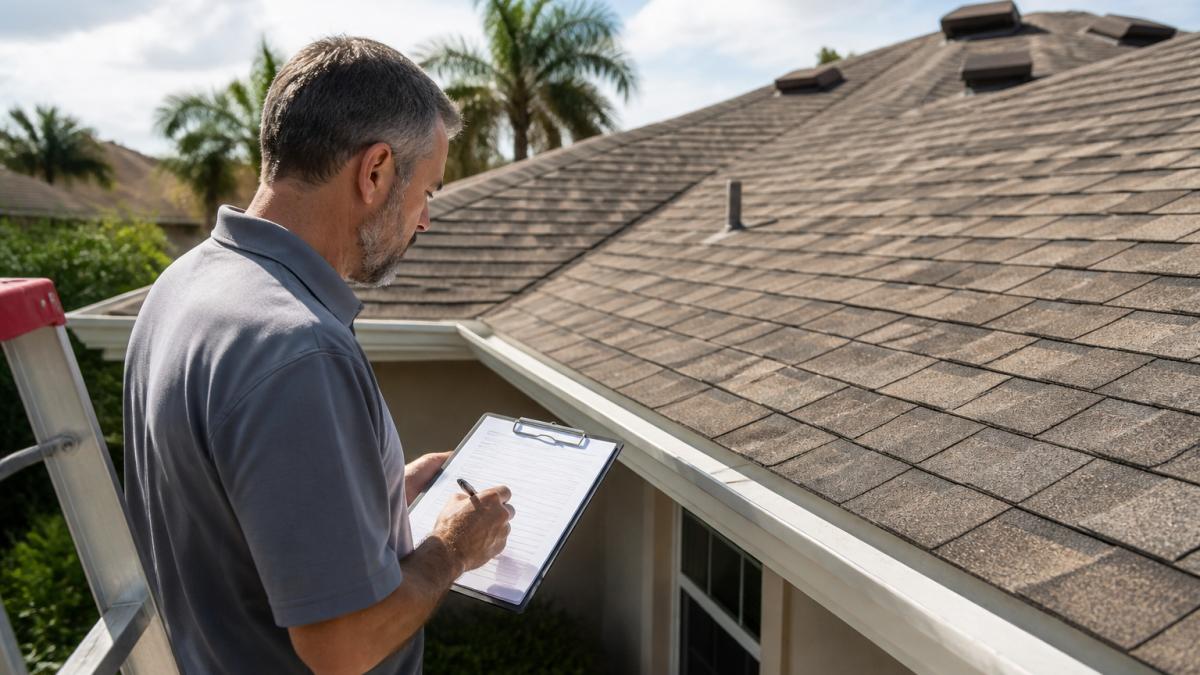
The appraiser schedules a 1-2 hour inspection, walking through your home, measuring rooms, noting condition, and photographing key features.
They examine:
- Square footage and room layout
- Foundation and structural condition
- Roof age and condition
- HVAC system and appliances
- Kitchen and bathroom updates
- Flooring and wall finishes
- Overall property condition
- Lot size and landscaping
Afterward, the appraiser researches comparable sales and prepares a written report, typically in 3-7 business days.
The report includes a final value estimate, detailed comparables analysis, and the appraiser's professional opinion, and it's yours to keep.
Appraisals typically cost $300-$600 depending on value and complexity, worth it when you need an official valuation.
Step 5: Update Your Property Details to Improve Your Estimate
Online estimates and CMAs are only as good as their data. If your property information is incomplete or outdated, your valuation will be too.
Key Property Facts That Impact Valuation
Make sure your property details are accurate in public records:
- Square footage (gross living area)
- Number of bedrooms and bathrooms
- Year built
- Lot size
- Property type (single-family, condo, etc.)
- Garage spaces and type
- Pool or other major features
Visit your county assessor's website and review your property record for errors. A 3,000 sq ft home listed as 2,500 sq ft gets undervalued by 20%.
If you find errors, contact your assessor's office to request corrections. This takes time but directly improves your valuation.
How Home Improvements and Renovations Affect Value
Recent renovations increase your home's market value, but not dollar-for-dollar. A $30,000 kitchen renovation might add only $20,000-$25,000.
The most valuable improvements are:
- Kitchen remodels
- Bathroom updates
- New roof
- HVAC replacement
- Flooring upgrades
- Exterior improvements (paint, landscaping)
Less valuable improvements:
- Interior decorating
- Furniture and fixtures you can take with you
- Highly personalized upgrades
When updating your property details online, mention recent major improvements. A kitchen or roof updated in the past 2-3 years helps online tools and appraisers give a more accurate estimate.
Reconciling Conflicting Estimates: A Practical Process
You've done your homework: an online estimate, comparable sales research, a CMA, maybe even an appraisal. But they don't all agree.
Here's how to make sense of conflicting numbers.
Why Different Methods Give Different Results
Each method has different strengths and limitations:
| Method | Strength | Limitation |
|---|---|---|
| Online estimate | Fast, free, instant | Incomplete data, no local insight |
| Comparable sales research | Uses actual sales data | Requires manual research and judgment |
| CMA from agent | Professional analysis, MLS access | Agent has incentive to list high |
| Professional appraisal | Thorough inspection, official standard | Costs money, takes time |
A CMA might estimate $450,000 because the agent wants your listing, an online tool $425,000 because it doesn't know about your renovations, and an appraisal $440,000 because the appraiser found very close comps.
These aren't contradictions, just different data and methodology.
How to Choose the Right Valuation Method for Your Goal
Your goal determines which valuation method matters most.
If you're refinancing: Your lender requires an appraisal. This is non-negotiable.
If you're curious about your home's value: Start with comparable sales research and an online estimate.
When estimates conflict, look for outliers.
Determining the market value home represents accurately takes effort, but it's worth it.
The five-step process here, from online estimates through professional appraisals, gives you multiple perspectives.
At FloridaSells, we help homeowners and buyers in Orange and Osceola County navigate this process with clarity and confidence.
Frequently Asked Questions
What is the most accurate way to estimate a home's market value?
The most accurate approach combines three methods: an online home value estimator for a baseline, comparable home sales analysis from recent transactions in your neighborhood, and a professional appraisal if you need a defensible valuation for refinancing or a mortgage application. Each method has strengths, online tools are fast and free, comparable sales reflect actual market activity, and appraisers provide official documentation. For the highest confidence, cross-reference all three and look for consistency in the range they produce.
How do comparable home sales help determine market value?
Comparable home sales show what similar homes actually sold for recently in your local market. By analyzing homes with similar square footage, lot size, age, condition, and location, you establish a realistic price range. Real estate professionals analyze price per square foot, days on market, and sale dates to adjust for market trends. This method is powerful because it reflects actual buyer behavior rather than algorithm estimates. The key is finding true comparables, homes similar enough that their sale prices directly inform yours.
Are online home value estimators accurate?
Online home value estimators provide a useful starting point but are not always precise. They rely on automated valuation models that use public records, recent sales, and property data, but they cannot account for unique home features, recent renovations, or local neighborhood nuances. Estimates can vary significantly between tools. Use them to establish a ballpark range, but don't rely on them alone. Cross-check with comparable home sales and a professional appraisal, especially if you're making major financial decisions like refinancing or selling.
What is the difference between assessed value and market value?
Assessed value is determined by your local assessor for property tax purposes and is often lower than market value. Market value is what a buyer would pay for your home on the open market today. These differ because assessments use formulas and may not update frequently, while market value reflects current buyer demand, recent comparable sales, and neighborhood trends. For selling, refinancing, or financial planning, market value is what matters. Your assessed value appears on your property tax bill and is public record, but it should not drive your home's pricing strategy.