 how-to
Buying a Home With an Old Roof in Florida: A Buyer's Guide
Table of Contents
- Understanding Roof Age and the 15-Year Rule in Florida
- How Roof Condition Affects Your Home Purchase
- Getting a Roof Inspection When Buying a House
- Homeowners Insurance for an Older Roof
- Lender and Mortgage Requirements for Insurable Property
- Negotiate Roof Replacement When Buying a Home
- Roof Replacement Cost in Florida and Your Budget
- Your Step-by-Step Due Diligence Timeline
- Frequently Asked Questions
Last Updated: October 14, 2026
Understanding Roof Age and the 15-Year Rule in Florida
When buying home with old roof in Florida, age drives insurability. Most Florida carriers won't write new policies for roofs over 15 years old, and some cancel at that threshold.
Asphalt shingles last 15-20 years, less in Florida's heat and humidity. Metal and tile perform better but also degrade.
Actual age matters more than condition: a pristine 14-year-old roof is still a liability, while a shabby 10-year-old roof meets the age requirement.
How Roof Condition Affects Your Home Purchase
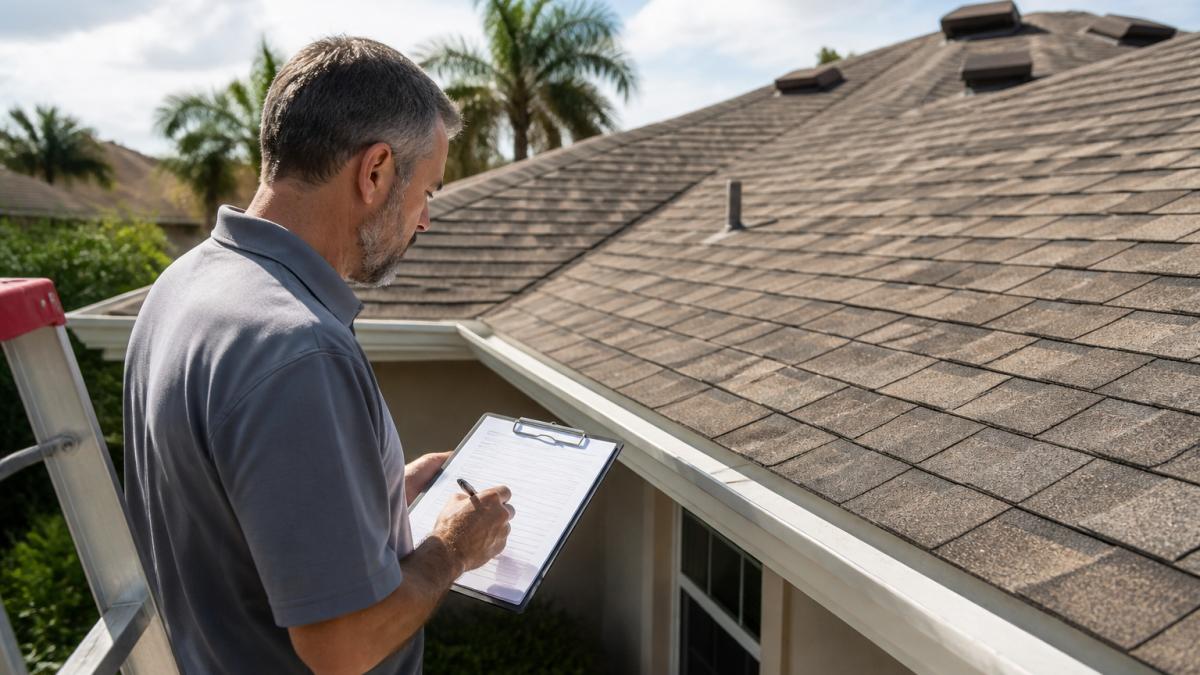
Roof condition and age are different but both matter. A roof inspection when buying a house reveals curling shingles, leaks, and insecure flashing, issues possible on any roof.
Carriers weigh both. Even a 10-year-old roof can be uninsurable until repaired, storm damage, missing shingles, and deteriorated flashing trigger underwriting flags.
A pre-offer roof inspection pays for itself. A roofing contractor's assessment before you submit an offer costs $200-400 but gives you leverage and certainty.
Getting a Roof Inspection When Buying a House
A roof inspection when buying a house differs from a general home inspection.
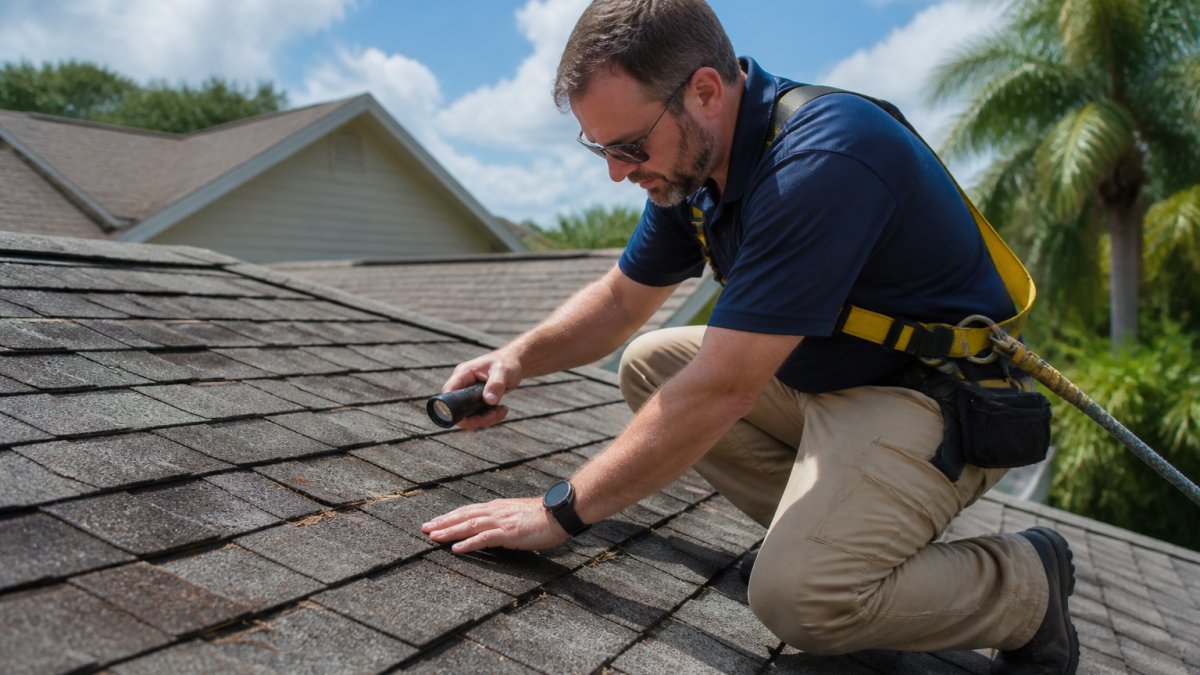
Schedule it during due diligence, most contracts give you 7-10 days.
Ask for a written report covering age, material, condition rating, and recommended repairs. Insurers want proof the roof meets their underwriting standards.
Many contractors offer a "roof certification" stating the roof meets minimum coverage standards. Request it if the roof is over 10 years old.
Homeowners Insurance for an Older Roof
Homeowners insurance for an older roof is the biggest obstacle when buying home with old roof in Florida.
Underwriting starts with the roof inspection report and age.
Some insurers approve coverage contingent on replacement within 12-24 months, common for aging roofs in fair condition.
Private insurers are increasingly selective: roof age is now a top underwriting criterion alongside location and claims history.
Get a pre-approval letter from your insurer before closing. Without it, your lender may not approve the mortgage.
Lender and Mortgage Requirements for Insurable Property
Your lender doesn't inspect the roof but requires proof the property is insurable before funding. If the roof can't be insured, the loan can't close, no matter your credit or down payment.
The requirement isn't simply "insurance exists", it's "insurance exists with a carrier and coverage the lender will accept." That distinction is where most old-roof deals fall apart. Lenders typically require:
- A bound policy at closing. Not a quote, not a binder subject to inspection, not a conditional approval, the closing package requires a paid or bindable policy effective on the closing date.
- Dwelling coverage at or above the lender's minimum. If the lender requires $350,000 and your only policy caps at $300,000, the loan won't close, common on older homes where replacement cost estimates and carrier caps diverge.
- A carrier the lender recognizes. Most conventional lenders accept a licensed admitted carrier; some won't accept a surplus lines carrier or a named-peril-only policy. If surplus lines is your only option, get written confirmation from your loan officer.
What the lender actually checks
When your loan file goes to underwriting, the underwriter reviews the insurance binder or declarations page for:
- The named insured matches the borrower.
- The property address matches the subject property.
- The coverage amount meets or exceeds the lender's minimum.
- The policy is effective on or before the closing date.
- The mortgagee clause names the lender correctly.
If any of those items are wrong, the closing is delayed. If the policy cannot be obtained at all, the loan is denied.
The insurability catch-22, and how to break it
You need a mortgage to buy the house, insurance to get the mortgage, and an insurable house to get insurance. If the roof is too old or damaged, the chain breaks at the first link.
Buyers break this chain by resolving the roof issue before final underwriting. Three paths:
- Seller replaces the roof before closing. The seller hires the contractor, pulls the permit, and completes the work; the certificate of completion goes to your insurer, your policy binds on a new roof, and the lender's insurability requirement is satisfied. Cleanest for the lender, but requires the seller to have cash and time.
- Seller credits you at closing, and you replace after closing. Lenders typically allow this only if the credit is a seller concession and the insurability requirement is still met at closing, meaning the roof must be insurable then, even if old. If it's uninsurable, the lender won't close regardless of the credit.
- You replace the roof before closing. You fund it out of pocket or via a renovation loan, and the new roof satisfies insurer and lender. Most expensive path, but the most controllable.
Escrow holds and repair escrows
Some lenders allow a repair escrow when the roof is damaged but repairable: funds are held back, the repair is done after closing, and money is released once verified. More common on government-backed loans and rarely covers full replacement. Get requirements in writing, including who inspects and what happens if costs exceed the escrow.
Questions to ask your lender early
Ask these before you make an offer:
- What is your minimum dwelling coverage requirement for this property?
- Will you accept a policy from a surplus lines carrier?
- Will you accept a policy with a roof exclusion or a separate roof deductible?
Get the answers in writing. A verbal "that should be fine" from a loan officer is not a commitment, and underwriting can reverse it.
How this connects to your offer price
If the roof is old but insurable, the lender closes and your leverage is price and credits. If it's uninsurable, the lender won't close and your only options are replacement before closing or walking away. Knowing which situation you're in before making an offer determines whether you're negotiating dollars or deal viability.
Negotiate Roof Replacement When Buying a Home
Negotiating roof replacement when buying a home requires strategy. You have leverage if the inspection reveals problems, but only if you use it early.
If the roof inspection shows damage or age-related wear, you have three options:
-
Request seller credit. The seller credits funds at closing to cover replacement, reducing the sale price; you handle the work after closing. Typical cost: $8,000-15,000 depending on size and material.
-
Request the seller replace the roof. Slower and less controllable for you, but it transfers the risk to the seller.
-
Price the replacement into your offer. Accept the roof as-is and price replacement into your offer amount, only viable with strong financing and a desirable property.
Most buyers choose option 1, seller credit. It's faster, and you can choose your contractor and timing.
The negotiation window is during the inspection period. Once you remove inspection contingencies, you've lost use. Make roof issues part of your renegotiation before you clear inspections.
Roof Replacement Cost in Florida and Your Budget
Roof replacement cost in Florida varies by material, size, and complexity: asphalt shingles run $8,000-12,000 for an average home, metal $12,000-18,000, and tile $15,000-25,000 or more.
Those figures cover labor and materials only. Permits, inspections, and disposal add 10-15%, and deck damage raises costs significantly.
Factor replacement into your budget: a 12-year-old roof means assuming replacement within 3-5 years.
Some carriers discount new roofs, a metal roof might cut your annual premium by $300-500 versus asphalt, offsetting some replacement cost over time.
At FloridaSells, we help buyers understand the true cost of homeownership, including deferred maintenance like roof replacement. Factor these costs into your offer price and long-term budget.
Your Step-by-Step Due Diligence Timeline
Most guides say "inspect the roof and get insurance." That's not a plan. This is, with the contract mechanics, deadlines, and decision points that determine whether your deal closes.
This timeline assumes a 10-day inspection period and 30-day closing. Adjust the day numbers to your contract but keep the sequence.
Before you make an offer
- Pull the permit history. County records are public. The most recent roofing permit date is the best evidence of installation date. No permit for a roof that looks newer than the house is a red flag.
- Ask the seller for documentation. Request the contractor's invoice, manufacturer's warranty, and repair receipts. Asking early reveals how forthcoming the seller is.
- Get an insurance quote before you write the offer. Call two or three carriers with the address and roof age, no full application needed for a ballpark. If every carrier says no, it's a deal-level problem, not a negotiation-level one.
Days 1-3: Offer and inspection period
- Write the offer with a roof-specific inspection contingency. It makes your intent clear and gives you a clean basis to renegotiate.
- Set the inspection period as long as the seller will accept. Ten days is standard; take 14 if offered. Extra days cost nothing and cover a booked-out roofer.
- Schedule the roof inspection immediately. Don't wait for the general home inspector's report. Book a licensed roofing contractor for day 3 or 4. Roofers are busy after storms, so call on day 1.
Days 4-5: Roof inspection and report
- Attend the inspection if you can. Ask the roofer to show you what they see, photos of decking, flashing, and the attic underside beat a written summary.
- Get the report in writing. It should state age, material, condition, remaining useful life, and recommended repairs. Ask for photos.
- Request a roof certification if the roof is over 10 years old. It's a signed statement that the roof meets minimum insurability standards. Ask your insurer which certifications they accept before paying for one.
Days 6-7: Insurance underwriting
- Submit the roof report to two or three carriers. Appetites for roof age differ, one may approve what another denies.
- Ask each carrier for a written commitment, not a verbal quote. Request a binder or written conditional approval.
- If all standard carriers decline, quote the state-run insurer. A fallback, not a first call, pricier with narrower coverage, but it satisfies the lender's insurability requirement in most cases.
Days 8-9: Appraisal and lender underwriting
- The appraisal is separate from the inspection. The appraiser values the home, not the roof, but a poor-condition note can trigger a lender repair requirement. Ask whether the appraisal will include one.
- Submit the insurance binder to the lender before final underwriting.
- If the lender requires replacement before closing, get the scope in writing. Full replacement or specific repair, the scope determines cost and timeline.
Day 10: Renegotiate or remove contingencies
This is the decision point. Three outcomes:
- The roof is insurable and the lender is satisfied. Remove contingencies and proceed. You may still negotiate a credit for future replacement, but you're not required to.
- The roof is insurable but repairs were found. Negotiate a seller credit or price reduction, in writing as a contract amendment, before removing contingencies.
- The roof is uninsurable. Require the seller to replace it before closing, or walk away. Removing contingencies without resolving this risks your earnest money.
Days 11-30: Closing
- If the seller is replacing the roof, track the permit and inspection. Work must be completed and inspected before closing, get the certificate of completion and final sign-off.
- If you're replacing the roof after closing, confirm in writing your lender will close without it. Some won't.
- Bind your insurance policy before closing. It must be effective on the closing date, don't wait until the day before.
What to do if the timeline slips
Roofers get busy, insurers slow, appraisers backed up. If you're running out of inspection period without answers, request an extension in writing, sellers usually grant short ones for good-faith progress. What they don't forgive is silence followed by a day-10 price-reduction request.
Frequently Asked Questions
Can you buy a home in Florida with an old roof?
Yes, you can buy a home with an old roof in Florida, but it requires careful planning. The primary challenges are securing homeowners insurance and meeting lender requirements. Many insurers enforce a 15-year rule on roof age, and lenders require the property to be insurable before closing. A roof inspection, insurance pre-approval, and negotiated repairs or credits can help you move forward. Working with a local real estate professional who understands Florida's insurance landscape is essential to navigate these requirements successfully.
What is the 15-year roof rule in Florida?
Florida's 15-year roof rule is an industry standard, not a state law, used by many homeowners insurance carriers. Insurers typically will not issue a new policy for a home with a roof older than 15 years unless it has been inspected and certified to be in good condition. Some carriers allow roofs up to 20 or 25 years if the roof is well-maintained, while others are stricter. The rule varies by insurer and the roof material. Asphalt shingles typically have a 15-20 year lifespan, while metal roofs may last 40-70 years. Always verify your specific insurer's policy before buying.
How much does a roof replacement cost in Florida?
Roof replacement costs in Florida depend on the roof size, material, and local labor rates. Labor, permits, and removal of the old roof add to the total. Get multiple roofing estimates from licensed contractors to compare pricing. If the seller agrees to credit you at closing or handle the replacement, clarify whether they will use a licensed contractor and what warranty applies to the new roof.
Should I get a roof inspection before buying a home with an older roof?
Absolutely. A professional roof inspection is essential when buying a home with an older roof. The inspector will assess the roof's remaining useful life, identify leaks, damage, or deterioration, and provide a detailed report. This report is critical for negotiating repairs or credits with the seller, obtaining homeowners insurance approval, and satisfying lender requirements. Include a roof inspection contingency in your purchase contract so you can back out or renegotiate if the roof condition is worse than expected. The inspection is one of the best investments you can make during the buying process.