 how-to
Tips for Downsizing Your Home: A Central Florida Guide
Table of Contents
- Why Downsizing Makes Sense for Central Florida Homeowners
- How to Plan a Downsizing Move: Start With Your Timeline
- Selling a Home Before Downsizing: What You Need to Know
- Working Through Your Home Room by Room
- What to Get Rid of When Downsizing: Making Hard Decisions
- Downsizing Checklist for Seniors: Special Considerations
- Plan Your Smaller Home's Floor Plan Before You Move
- Avoid These Common Downsizing Mistakes
- Frequently Asked Questions
Last Updated: October 17, 2026
Why Downsizing Makes Sense for Central Florida Homeowners
Downsizing is one of the biggest decisions you'll make as a homeowner.
At FloridaSells, we've guided hundreds of homeowners through downsizing. Many homeowners find downsizing in Central Florida opens doors to lower maintenance costs, reduced property taxes, and proximity to amenities they actually use.
Downsizing isn't just about moving to a smaller home, it's about rethinking how you live. Evaluate your current space honestly, decide what possessions truly matter, and plan a realistic timeline. The process takes effort, but the payoff is worth it.
Here's what makes downsizing in this region practical:
- Lower cooling costs in a smaller footprint
- Access to active adult communities with built-in social networks
- Reduced yard maintenance in Florida's intense heat and humidity
- Simplified estate planning and property management
- More disposable income after the move
Start early and stay organized. Homeowners who rush end up paying more to store items, donating at the last minute, or moving things they didn't want to keep.
How to Plan a Downsizing Move: Start With Your Timeline
Your timeline is the backbone of a successful downsizing move. Without one, you'll feel rushed and likely make decisions you'll regret.
Start by asking yourself these questions:
- When do you want to be in your new home?
- How much time can you dedicate each week to sorting and packing?
- Do you need to sell your current home before buying a smaller one?
- Are there major life events coming up that might affect your move?
Once you have answers, work backward from your target move date. If you want to move by next summer, start planning now. Break the process into phases: assessment, sorting, selling or donating, and final packing.
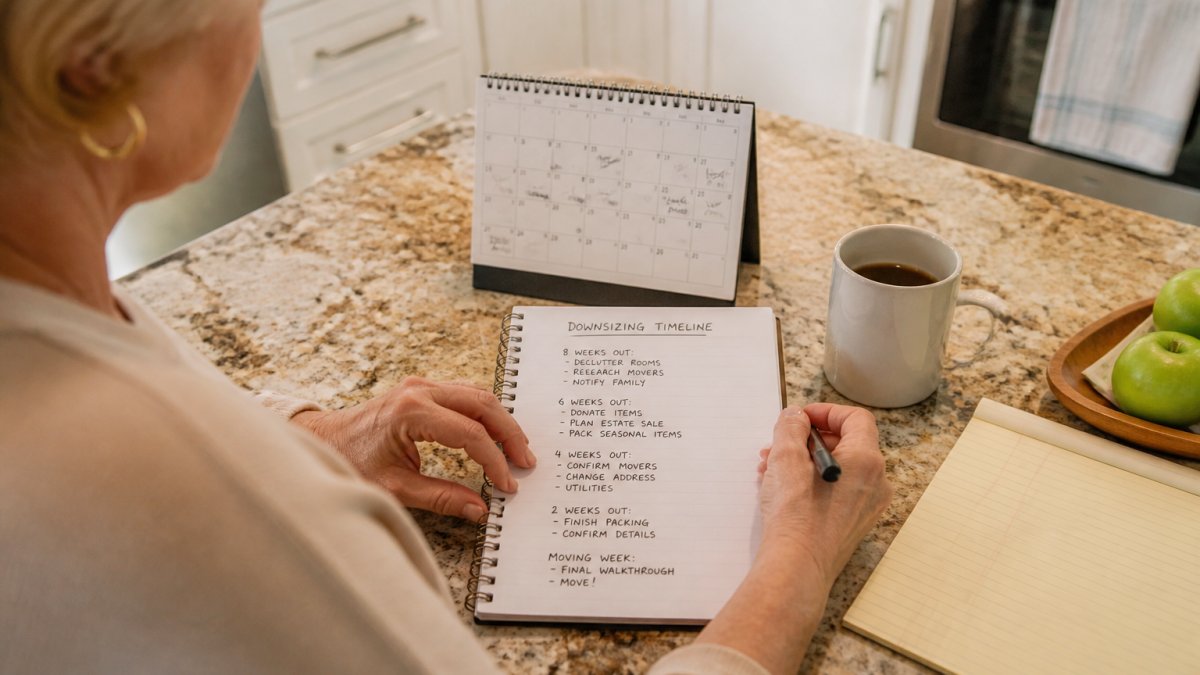
A realistic downsizing timeline looks like this:
- Months 1-2: Assess your current home and plan which items to keep
- Months 2-4: Sort belongings room by room
- Months 4-7: Sell items, donate what you can, and arrange estate sales if needed
- Months 7-9: Prepare your current home for sale
- Months 9-12: Close on your current home and move into your new space
The biggest mistake is underestimating how long this takes. A compressed timeline leads to panic decisions and wasted money.
Selling a Home Before Downsizing: What You Need to Know
Most people downsizing in Central Florida need to sell their current home to fund a smaller one. Selling while managing the emotional weight of leaving takes strategy and professional support.
First, get an accurate home valuation. Don't rely on online estimates alone, work with a local professional who understands the Central Florida market.
Next, decide on your listing strategy. Some homeowners list before they've fully downsized. Others downsize first, then list. There's no perfect answer, but here's what works:
- List first if: You need the sale proceeds to buy your new home
- Downsize first if: You want a clean, staged home that shows well to buyers
- Do both simultaneously if: You have the budget and emotional energy
When you list, be transparent about needed repairs. Central Florida buyers often ask about roof condition, HVAC systems, and flood zones. Have these inspections done before listing to avoid surprises during negotiations.
Honest communication with your real estate professional about your timeline and goals ensures you get the best price in the quickest timeframe.
Working Through Your Home Room by Room
Downsize systematically, one room at a time. Sorting everything at once overwhelms you and leads to poor decisions. Pick a starting room with fewer sentimental items and finish it before moving to the next space.
Start with low-stakes areas like the garage, storage closet, or guest bedroom. These rooms often contain items you've already forgotten about, which makes sorting easier. Save your bedroom, kitchen, and living spaces for later when you've built momentum and confidence.
For each room, block out a full day or weekend on your calendar and commit to it. Turn off your phone, tell family you're unavailable, and focus entirely on the task.
Taking Inventory and Sorting Into Four Categories
Before deciding what stays and goes, see what you actually have. Walk through each room with a notebook or your phone and note major items: furniture, collections, electronics, kitchenware, and anything else taking up significant space.
Once you've inventoried the room, sort everything into four clear categories:
- Keep: Items you use regularly or genuinely love
- Donate: Items in good condition you don't use
- Sell: Items with resale value worth the effort to list
- Discard: Broken items, outdated goods, or anything unusable
Use physical labels or bags to mark each category. Don't try to hold this in your head. Visual organization prevents items from drifting back into the "keep" pile out of habit.
| Category | Best For | Timeline |
|---|---|---|
| Keep | Daily use, sentimental favorites, essential items | Move with you |
| Donate | Usable items, clothes, books, household goods | Within 1-2 weeks |
| Sell | Furniture, electronics, collectibles with value | 2-4 weeks |
| Discard | Broken items, worn clothing, unusable goods | Immediately |
This four-category system removes ambiguity. You're not deciding "maybe someday", you're making a choice and moving forward.
What to Get Rid of When Downsizing: Making Hard Decisions
The hardest part of downsizing isn't the physical work, it's deciding what to eliminate.
Start by measuring your new home's rooms and doorways. This creates a hard boundary. If your new living room is 12 by 14 feet, you can't fit a sectional sofa that's 10 feet long.
Next, apply the practical filter: Does this item serve a purpose in my new life, not your old one? If you're moving to an active adult community with social events, do you need a formal dining set that seats 12?
Common items to eliminate during downsizing:
- Extra furniture from a larger home
- Duplicate kitchen tools and appliances
- Collections you've outgrown
- Clothing that doesn't fit or suit your lifestyle
- Books you've already read and won't reread
- Decorative items that don't match your new aesthetic
- Hobby equipment you haven't used in years
- Inherited items you feel obligated to keep
The One-Year Rule and Sentimental Items
The one-year rule is simple: If you haven't used something in a year, you probably don't need it. This rule works for most items, kitchen gadgets, tools, seasonal decorations, clothing.
But sentimental items are different. They don't follow the one-year rule because their value isn't practical. A handmade quilt from your grandmother, your children's baby clothes, or photos from decades past matter emotionally, not functionally.
For sentimental items, use this approach:
- Photograph everything. Create a digital archive of items you're letting go of. You keep the memory without the physical clutter.
- Keep the best, not everything. Choose one or two pieces from a collection rather than keeping all of it.
- Repurpose when possible. Turn your child's baby clothes into a quilt. Frame a few meaningful photos instead of storing boxes of them.
- Be honest about space. Your new home has limited room. Prioritize the sentimental items that matter most.
The emotional weight is real, but it doesn't have to trap you. Most people feel lighter after letting go of items they kept only out of obligation.
Downsizing Checklist for Seniors: Special Considerations
Downsizing as a senior involves unique considerations beyond moving to a smaller space. Your new home should support your lifestyle, health needs, and social connections for the next 10, 20, or more years.
Before you commit to a new home, evaluate these factors:
- Accessibility: Can you navigate the home safely? Are doorways wide enough for mobility aids if needed? Are there grab bars or space to install them?
- Single-story vs. multi-story: Stairs become harder to manage with age. A single-story home or elevator access simplifies daily life.
- Proximity to services: How close is the new home to doctors, pharmacies, grocery stores, and hospitals?
- Community: Does the neighborhood have walkable amenities? Are there social groups or activities you'd enjoy?
- Maintenance: What's included in HOA fees? Who handles yard work, roof repairs, and exterior maintenance?
Many seniors in Central Florida choose active adult communities specifically designed for 55+ residents. These communities often include fitness centers, social clubs, and maintenance-free living. Research what's available in your target area.
Also consider whether you want to age in place or plan to move again in 10 years. If you're planning to age in place, invest in a home that supports that goal now. If you think you might move again, choose something more flexible.
Plan Your Smaller Home's Floor Plan Before You Move
One of the biggest downsizer regrets is buying a home without planning how furniture will fit. You can't know if your couch works in the new living room until you measure both. Don't guess.
Before making an offer, get exact measurements of every room, doorway, and hallway. This tells you what furniture can actually move with you.
Create a simple floor plan using these measurements. You can use graph paper, a free online tool, or even sketch it out by hand.
For each room, ask:
- Will my current furniture fit through the doorway?
- Does my bed fit in the bedroom with walking space around it?
- Can my dining table work in the smaller dining area?
- Where will my office equipment go?
- Is there closet space for your belongings?
If favorite pieces don't fit, you have three options: sell them now, buy new pieces that fit, or reconsider the home. Don't move into a space hoping you'll figure it out later.
Avoid These Common Downsizing Mistakes
Most downsizing problems come from predictable mistakes. Knowing what to avoid saves time, money, and stress.
Mistake 1: Starting too late. Rushing through downsizing leads to poor decisions.
Mistake 2: Keeping items "just in case." This phrase is a downsizing killer.
Mistake 4: Not measuring the new home. Buying a smaller home without confirming your furniture fits is a recipe for disappointment.
Mistake 5: Handling the move alone. Downsizing is emotionally taxing.
Mistake 6: Ignoring the financial side. Downsizing should improve your financial situation.
Following these tips for downsizing home in central in Florida, this major life transition doesn't have to be overwhelming.
Frequently Asked Questions
How far in advance should you start downsizing before a move?
Start your downsizing process 3-6 months before your planned move date. This timeline gives you enough time to sort through belongings without rushing, arrange for donations or sales, and adjust to a smaller space mentally. If you're selling your current home before downsizing, begin even earlier, at least 6-9 months out, to allow time for the sale to close and coordinate your move to the new property.
What should you get rid of first when downsizing?
Begin with items you haven't used in the past year: seasonal decorations, duplicate kitchen tools, worn clothing, and extra furniture. Next, tackle items that don't fit your new space or lifestyle, large entertainment systems, oversized dining tables, or bulky outdoor equipment. These are emotionally easier to release than sentimental items, so starting here builds momentum and helps you establish clear decision-making criteria for tougher choices ahead.
How do you decide what to keep when moving to a smaller home?
Measure your new home's rooms and doorways first, then measure your existing furniture to see what physically fits. Keep only items that serve a purpose, bring you joy, or have genuine sentimental value. Prioritize multi-functional pieces, ottomans with storage, nesting tables, or murphy beds. Ask yourself: Will this item work in the new space? Do I use it regularly? If the answer is no to both questions, it's a candidate for donation, sale, or disposal.
What are the three downsizing tactics that actually work?
The most effective tactics are: (1) the one-year rule (discard anything unused in 12 months), (2) room-by-room sorting into four categories (keep, donate, sell, discard), and (3) measuring your new home's floor plan and furniture placement before you move. These approaches prevent overwhelm, create accountability, and ensure you don't bring items that won't fit or serve a purpose in your smaller home.